Wondering if you are in perimenopause? Learn common signs, how periods can change, what symptoms women report most often, and what to track for your appointment.
What is perimenopause?
Perimenopause is the transition leading up to menopause. Hormone production becomes more variable, ovulation becomes less predictable and periods often begin to change. Menopause itself is reached after 12 months without a menstrual period when there is no other cause and you are not using hormonal contraception that obscures bleeding patterns.
Search interest in perimenopause has risen sharply because many women enter this stage without realizing that symptoms can begin before periods stop. In a 2026 study of more than 7,600 US women aged 35 and older, about one in three were unsure which reproductive stage they were in, with uncertainty highest among women aged 40 to 44.
12 signs that can occur during perimenopause
- Periods becoming shorter, longer, heavier, lighter or more unpredictable
- Hot flushes or sudden waves of heat
- Night sweats
- Difficulty falling asleep or waking during the night
- Fatigue or feeling physically and mentally drained
- Irritability, anxiety or mood changes
- Brain fog, forgetfulness or trouble concentrating
- Weight gain or a change in where body fat is stored
- Joint or muscle aches
- Lower sexual desire or changes in arousal
- Vaginal dryness, burning or discomfort with sex
- Urinary frequency, urgency or recurrent urinary symptoms
Not everyone experiences all of these, and the same symptoms can also have other causes. Thyroid disorders, iron deficiency, sleep disorders, pregnancy, medication effects, depression and anxiety can overlap with the menopause transition, which is why persistent or concerning symptoms deserve a medical review rather than self-diagnosis.
Periods often provide the clearest clue
Early in perimenopause, cycles may simply become a little shorter or vary by several days. Later, skipped periods become more common. The Menopause Society notes that cycle length can eventually vary by seven days or more and longer gaps between periods can occur.
Bleeding changes are common, but “common” does not mean every change should be ignored. Very heavy bleeding, bleeding after sex, bleeding between periods, or bleeding after 12 months without a period should be discussed with a clinician.
The symptoms women actually report most
A 2026 international survey of more than 17,000 women found that hot flushes were the symptom people most often recognized as part of perimenopause. Yet among women aged 35 and older, the most frequently reported experiences included fatigue, physical and mental exhaustion, irritability, low mood, sleep problems, digestive symptoms and anxiety. That gap helps explain why many women do not initially connect their symptoms with the menopause transition.
What to track for 6 to 8 weeks
- First and last day of each period
- Bleeding amount and unusual spotting
- Hot flushes and night sweats
- Sleep quality and awakenings
- Mood, anxiety and concentration
- Headaches, aches and digestive symptoms
- Vaginal or urinary symptoms
- Medicines, supplements and alcohol/caffeine if they seem linked to symptoms
A brief daily record can make it easier to show patterns rather than trying to reconstruct them from memory.
When to book an appointment
Consider making an appointment if symptoms are affecting sleep, work, relationships or quality of life; if you are younger than 45 and think menopause may be starting; or if your bleeding pattern has changed in a way that worries you. Seek urgent medical care for very heavy bleeding associated with fainting, severe weakness, shortness of breath or other signs of significant blood loss.
Start with a free tracker
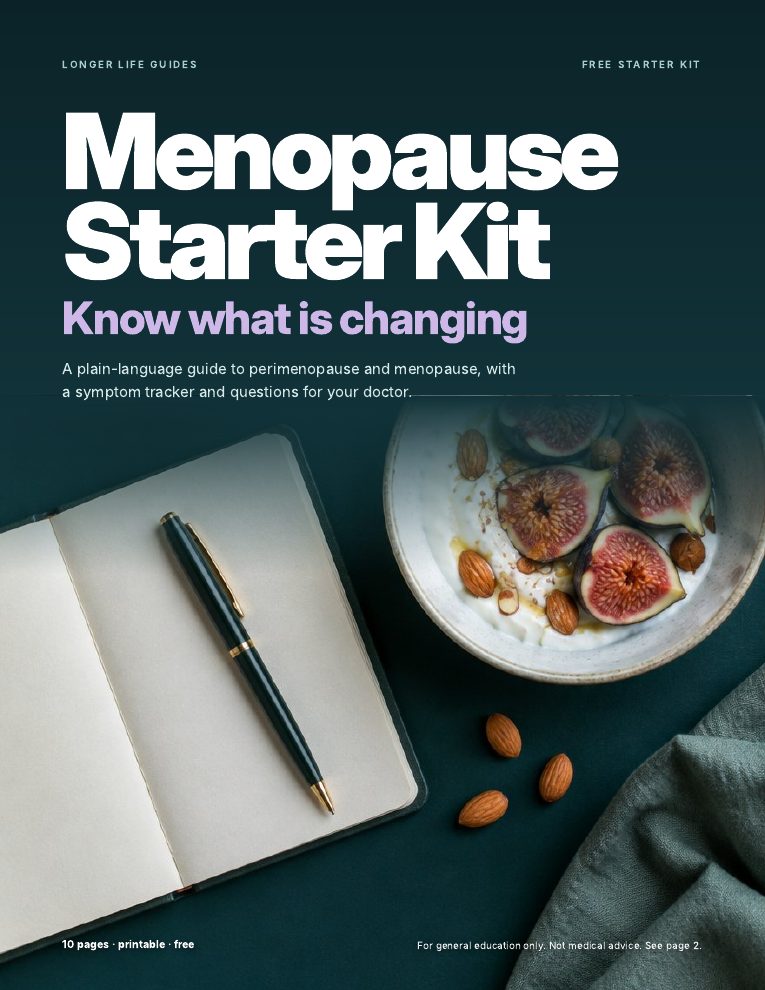
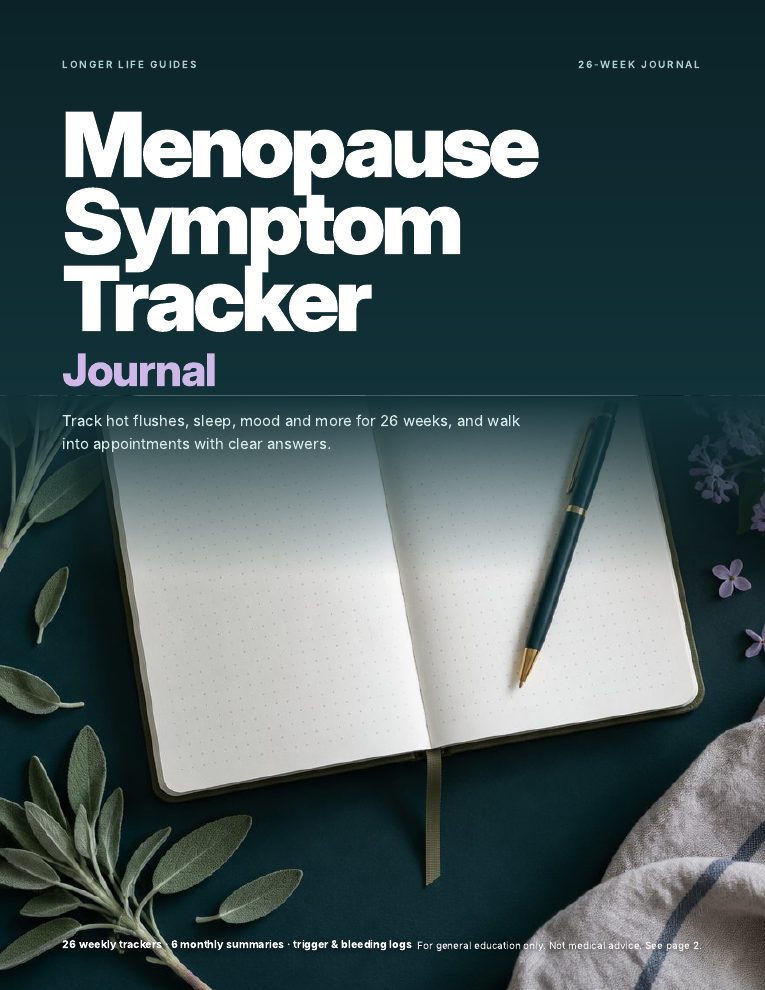
The Menopause Starter Kit explains the transition in plain language and includes a weekly tracker and questions to bring to your doctor. For longer-term tracking, the Menopause Symptom Tracker covers 26 weeks.