Night sweats and insomnia are common in perimenopause. Learn why sleep changes, what CBT can help with, and what treatment options to discuss with your clinician.
Why sleep becomes harder during the menopause transition
Sleep problems are common during perimenopause and after menopause. Some women struggle to fall asleep; others wake repeatedly or wake much earlier than planned. Night sweats can interrupt sleep, but they are not the only cause. Mood symptoms, restless legs, sleep apnoea, pain, bladder symptoms, alcohol, caffeine and changing sleep patterns can all contribute.
In a 2026 international survey, sleep problems were among the most commonly reported perimenopause symptoms. A separate 2026 Menopause Society report noted that insomnia affects a substantial proportion of perimenopausal and postmenopausal women.
Night sweats can create a cycle
A vasomotor symptom wakes you. You become hot, uncomfortable and alert. You start worrying that you will not function the next day. That extra alertness can make it harder to return to sleep, even after the body cools. After several difficult nights, the bed itself can become associated with frustration.
What can help?
Keep the bedroom cool and reduce obvious triggers
Light bedding, breathable sleepwear and a cooler room can make night sweats easier to manage. If alcohol, very spicy meals or late caffeine clearly trigger symptoms for you, reducing them may help — but there is no single trigger list that applies to everyone.
Use a regular wake time
A consistent wake time helps stabilize the sleep-wake rhythm even after a poor night. Long lie-ins and late naps can sometimes make the next night harder.
Consider CBT-based strategies
NICE recommends menopause-specific cognitive behavioural therapy as an option for sleep problems associated with vasomotor symptoms, either alongside other treatments, when other options are unsuitable, or when a person prefers a non-drug approach. CBT for insomnia works by changing sleep habits and the thoughts and behaviours that keep insomnia going.
Discuss treatment of hot flushes if they are driving the problem
If night sweats are frequent or severe, treating the vasomotor symptoms themselves may improve sleep. Hormone therapy is one treatment option for some people; nonhormonal medicines are also used. The right choice depends on your health history, risks, symptoms and preferences and should be discussed with a clinician.
When sleep needs a separate assessment
Not every sleep problem in midlife is caused by menopause. Loud snoring, witnessed pauses in breathing, waking with headaches, marked daytime sleepiness, uncomfortable leg sensations or persistent insomnia may point to a sleep disorder that deserves its own evaluation.
What to track
- Bedtime and wake time
- How long it took to fall asleep
- Number of awakenings
- Night sweats and hot flushes
- Alcohol and caffeine timing
- Exercise and daytime naps
- Mood and stress
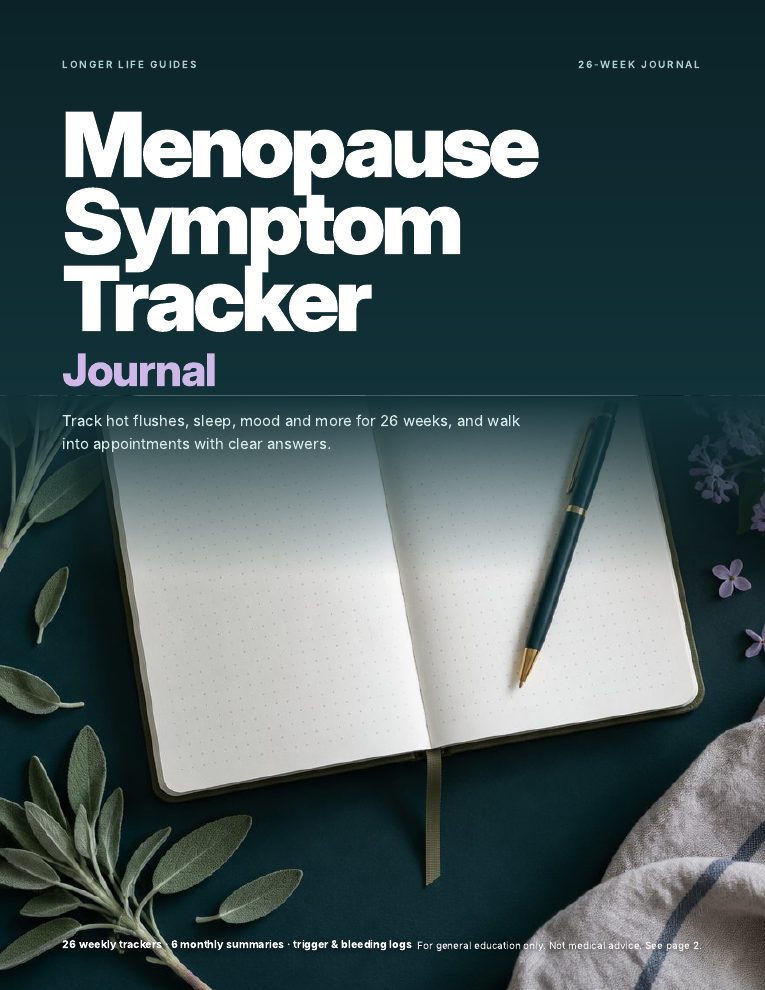
A short diary can help you and your clinician see whether the main driver is vasomotor symptoms, insomnia habits, mood, another sleep condition or a combination.
Use a structured sleep plan
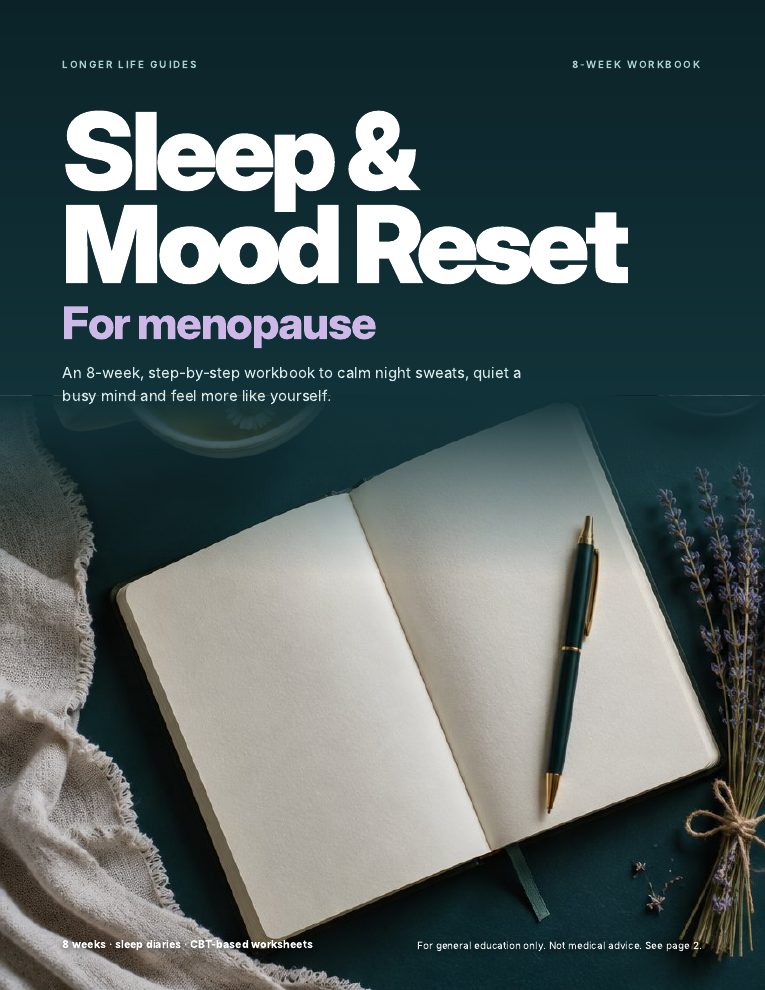
Sleep & Mood Reset is an 8-week workbook built around CBT-style strategies, sleep diaries, cooling, worry management and mood tracking. It is educational and is designed to be used alongside your own care team.