Do you need a blood test for perimenopause? Learn when FSH testing can help, why hormone levels fluctuate, and when clinicians usually diagnose perimenopause from symptoms.
The short answer
If you are otherwise healthy and aged 45 or older, you usually do not need a blood test to diagnose perimenopause. ACOG and NICE both advise that clinicians can generally identify the menopause transition from age, symptoms and menstrual-cycle changes.
This surprises many people because perimenopause feels like a hormone problem, so it seems logical that a hormone test should provide a clear yes-or-no answer. The difficulty is that hormones can fluctuate dramatically during the transition. A single result may reflect one day rather than the overall pattern.
What does FSH measure?
Follicle-stimulating hormone, or FSH, is produced by the pituitary gland and helps regulate ovarian function. FSH tends to rise as ovarian function declines, but during perimenopause the level can move up and down. That makes a one-off result unreliable for confirming or excluding perimenopause in a woman of typical menopause age.
When is testing usually not needed?
NICE recommends identifying perimenopause without laboratory testing in otherwise healthy people aged 45 or over who have new vasomotor symptoms such as hot flushes together with menstrual-cycle changes. ACOG gives similar guidance: your clinician can usually assess the pattern from your age, symptoms and periods.
Hormone testing is also not routinely recommended before starting hormone therapy for menopausal symptoms. Treatment decisions are generally based on symptoms, health history, risks, preferences and clinical assessment rather than chasing a target hormone number.
When might a clinician consider FSH testing?
Testing can be useful when the timing is less typical. NICE advises considering serum FSH in people aged 40 to 45 who have menopause-associated symptoms and cycle changes, and in people under 40 when menopause or premature ovarian insufficiency is suspected. ACOG also notes that women younger than 45 may be offered testing depending on their history.
Other blood tests may be ordered not to “prove perimenopause,” but to investigate other explanations for symptoms — for example, thyroid disease, anaemia or pregnancy — depending on your individual situation.
What about home menopause tests?
Home tests often measure FSH in urine. A positive result can show that FSH is elevated at that moment, but because levels fluctuate, it cannot tell you exactly where you are in the transition, predict when your final period will happen or replace a medical assessment. If you are buying a test because symptoms are confusing or concerning, a symptom and cycle history may be more useful information to bring to a clinician.
A practical way to prepare for an appointment
- Track cycle length and unusual bleeding
- List the symptoms that affect you most
- Note when they happen and how severe they are
- Record sleep, hot flushes and night sweats for several weeks
- List medicines and supplements
- Write down family history that may matter, such as early menopause, osteoporosis, blood clots or hormone-sensitive cancers
The aim is not to diagnose yourself. It is to give your clinician enough context to decide whether this looks like perimenopause or whether another cause needs checking.
Track first, test only when it adds value
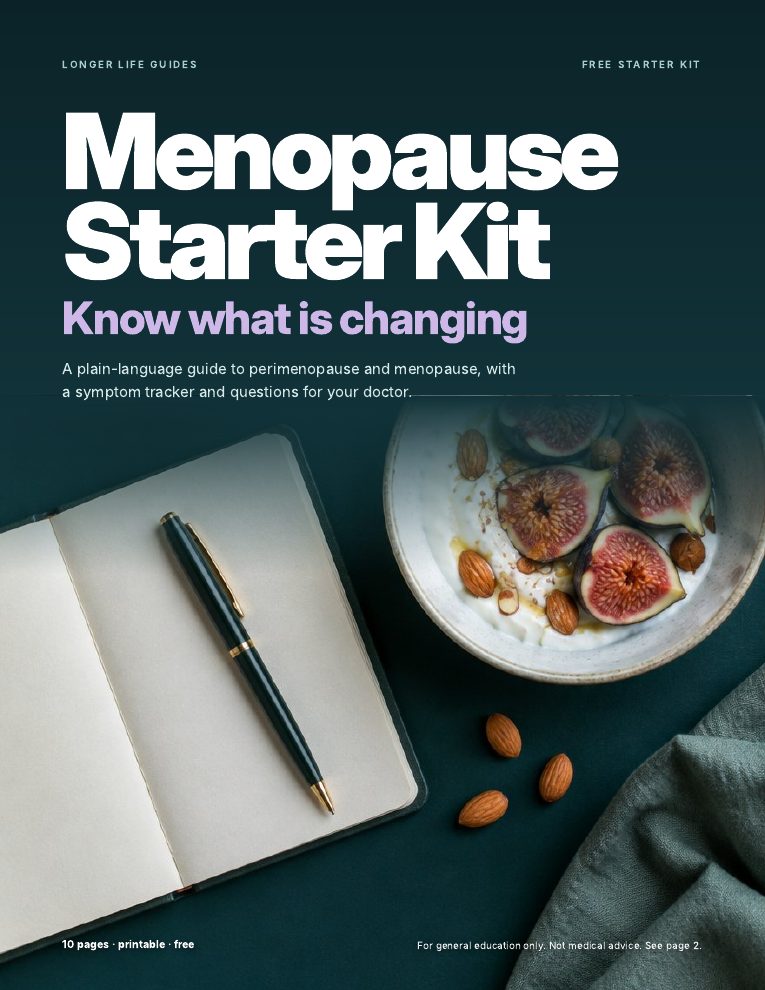
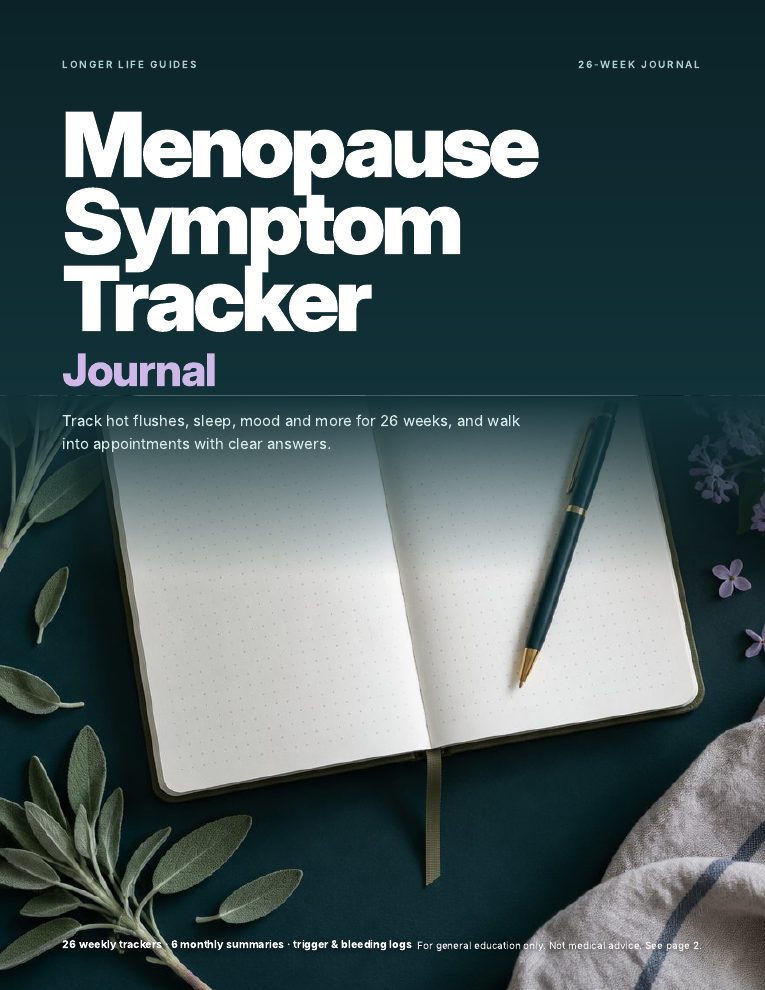
Use the free Menopause Starter Kit for a simple symptom tracker and appointment questions, or the 26-week tracker if you need a longer record.