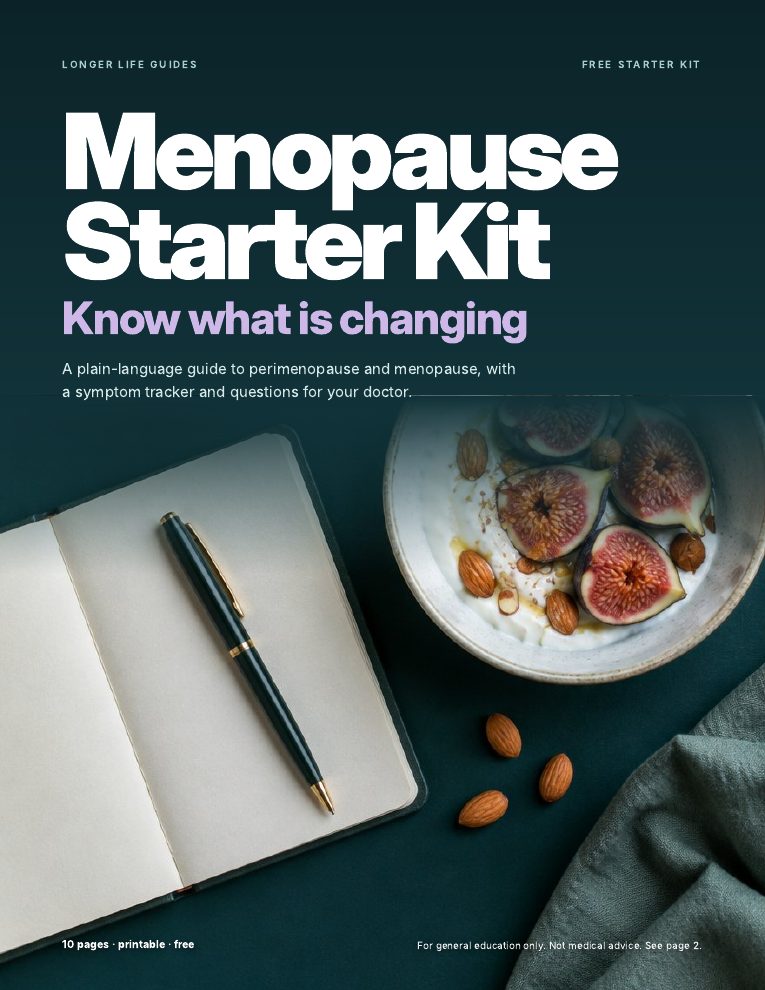
Hot flashes, poor sleep, mood swings, irregular periods? Learn the signs of perimenopause and menopause, how to track symptoms and what treatments to ask about.
Perimenopause and menopause are a natural stage of life, but that does not mean you have to just put up with symptoms. Many people wait years before raising them with a doctor, often because they are not sure what is related to menopause. Tracking your symptoms can make that conversation clearer and more productive.
Use our free menopause symptom checker to record what you are experiencing, then bring your results to your next appointment.
Perimenopause versus menopause
- Perimenopause is the transition leading up to menopause, when hormone levels, especially estrogen, rise and fall unpredictably. It often starts in your 40s and can last several years. Periods usually become irregular during this time.
- Menopause is confirmed when you have gone 12 months in a row without a period, without another cause. The average age is around 51, with most people reaching it between 45 and 55.
- Postmenopause is the time after that point.
Menopause that happens before age 40 is called premature menopause or premature ovarian insufficiency, and before 45 is considered early. Both are worth discussing with a doctor, as they can affect long-term bone and heart health.
Common symptoms
Symptoms vary widely. Some people have few, while others find them disruptive. Common ones include:
- changes in your period: shorter or longer cycles, lighter or heavier bleeding, skipped periods
- hot flashes and night sweats
- trouble sleeping
- mood changes, irritability, anxiety or low mood
- brain fog and difficulty concentrating
- vaginal dryness, discomfort during sex, or lower interest in sex
- needing to urinate more often or urgently, or more urinary tract infections
- joint and muscle aches
- headaches, heart palpitations, and changes in skin and hair
Hormone blood tests are not usually needed to diagnose perimenopause in people over 45, because levels fluctuate so much. Your symptoms and cycle pattern are often the most useful information.
How to track your symptoms
Try tracking for six to eight weeks. This shows patterns and helps separate a bad week from an ongoing issue. Note:
- the dates of any bleeding and how heavy it is
- which symptoms you have, how often, and how severe (for example, on a scale of 0 to 3)
- how symptoms affect your sleep, work, relationships and daily life
- possible triggers, such as alcohol, caffeine, spicy food, stress or warm rooms
- any medications or supplements you take
Also write down your top two or three concerns and what you would like help with. Appointments can be short, and a clear summary helps.
Treatment options to discuss
There is no single right approach. Options depend on your symptoms, health history and preferences.
Menopausal hormone therapy (MHT or HRT)
Hormone therapy is the most effective treatment for hot flashes and night sweats, and it also helps prevent bone loss. For most healthy people under 60, or within 10 years of their last period, the benefits often outweigh the risks. Estrogen comes as pills, patches, gels or sprays. If you have a uterus, a progestogen is added to protect the uterine lining. Your provider will review your personal risks, including any history of breast cancer, blood clots, stroke or heart disease.
Vaginal estrogen
Low-dose estrogen applied in the vagina treats dryness, discomfort and some urinary symptoms, with very little absorbed into the rest of the body.
Non-hormonal options
For people who cannot or prefer not to use hormones, some prescription medications can reduce hot flashes. These include certain antidepressants, gabapentin and newer medicines that target the brain's temperature control centre. Cognitive behavioural therapy (CBT) has good evidence for helping with hot flashes, sleep and mood. Vaginal moisturisers and lubricants can help with dryness.
Lifestyle support
Regular activity, strength training for bones and muscles, limiting alcohol, a cool bedroom and layered clothing can all help. These are also good for heart and bone health, which become more important after menopause.
When to get medical advice
Book an appointment with your doctor or nurse practitioner if symptoms affect your sleep, mood, work or relationships, or if you have questions about treatment. See a doctor promptly if you have:
- any vaginal bleeding after menopause (12 months or more after your last period), even spotting
- very heavy bleeding, bleeding between periods or after sex, or periods lasting longer than usual
- signs of menopause before age 45
- persistent low mood, anxiety or loss of interest in things you usually enjoy
If you have thoughts of harming yourself, call or text 9-8-8 (Suicide Crisis Helpline) any time, or call 9-1-1 in an emergency.
Try the free menopause symptom check tool
Rate your symptoms and get a printable summary for your appointment. It takes about a minute and your answers stay on your device.