Nausea, constipation and low appetite are common on GLP-1 medicines. Learn practical food and hydration strategies and which symptoms need medical attention.
Why stomach symptoms are so common
GLP-1 medicines change appetite and slow stomach emptying. Gastrointestinal symptoms are therefore among the most common adverse effects. FDA information for semaglutide and tirzepatide lists nausea, vomiting, diarrhoea, constipation and abdominal pain among common reactions, particularly during dose escalation.
Many symptoms improve with time, but severe or persistent symptoms are not something you should simply “push through.” Your prescriber needs to know if side effects are affecting hydration, nutrition or your ability to take the medicine safely.
When appetite is very low
Large meals can feel uncomfortable. Smaller meals and snacks may be easier to tolerate. When you can only eat a modest amount, start with nutrient-dense foods that fit your care plan — especially a protein source — rather than filling up first on drinks or low-nutrient snack foods.
There is no universal gram target that is correct for everyone. Protein targets depend on body size, age, kidney health, activity and other factors, so use the target set with your clinician or dietitian rather than copying a number from social media.
If nausea is the main problem
- Try smaller portions and eat slowly.
- Stop when you feel comfortably full; pushing past fullness can worsen symptoms.
- Choose simpler foods on difficult days and return to your usual balanced pattern as tolerated.
- Sip fluids regularly rather than drinking a large amount at once if that worsens nausea.
- Avoid making your own dose changes. Contact the prescriber if nausea is persistent or severe.
If constipation is the main problem
Constipation can be worsened by low fluid intake, a sudden drop in food volume and low fibre intake. Gradually increasing fibre from foods, drinking enough fluid for your needs and staying physically active may help. Increasing fibre quickly without enough fluid can make bloating and discomfort worse.
If you have kidney, heart or gastrointestinal conditions that affect fluid or fibre recommendations, follow your own care plan.
Red flags that need prompt medical care
Contact a healthcare professional urgently for severe or persistent abdominal pain, repeated vomiting, inability to keep fluids down, signs of dehydration, or severe constipation with increasing pain or vomiting. GLP-1 medicines carry warnings for serious gastrointestinal reactions and conditions such as pancreatitis and gallbladder disease. Severe upper abdominal pain that does not go away — especially if it radiates to the back or is accompanied by vomiting — should be assessed promptly.
Track patterns instead of guessing
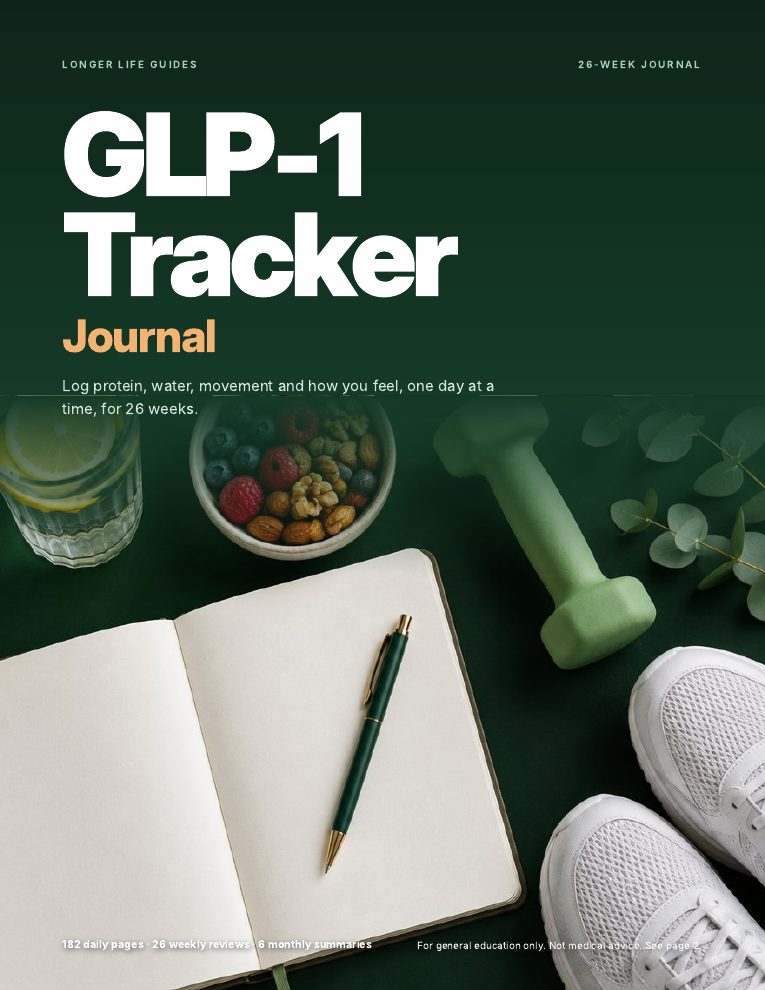
If symptoms seem tied to injection day, dose escalation, certain meals or low fluid intake, writing that pattern down can help your prescriber decide what needs to change. A tracker should never be used to self-adjust medication, but it can make your clinical review more useful.
Use a simple food-and-symptom structure
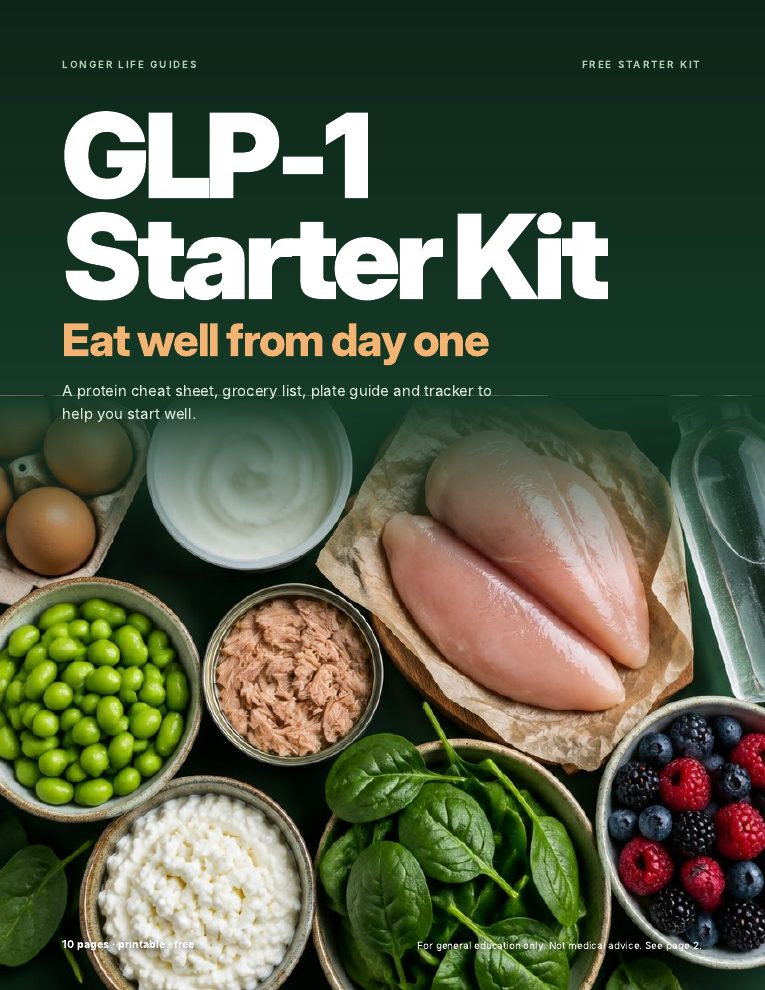
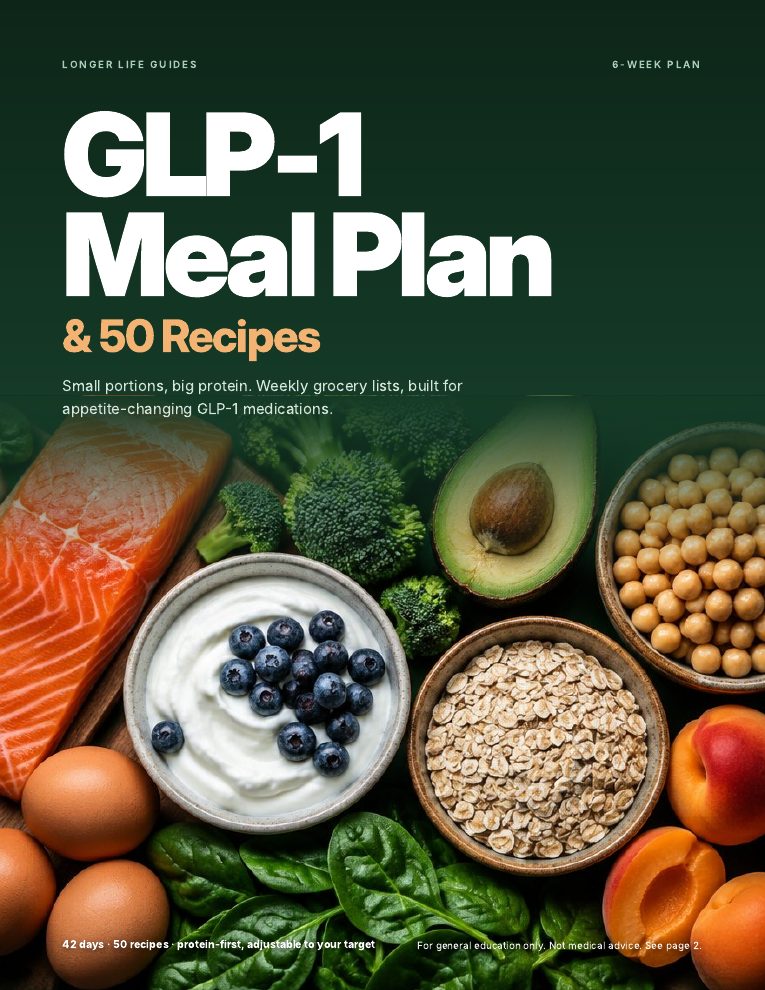
Start with the free GLP-1 Starter Kit for a protein-first plate, grocery list and side-effect eating tips. For longer tracking, use the 26-week journal or the meal plan.