Stopping a GLP-1 can bring appetite and weight changes. Learn what trials show about weight regain and how to plan a maintenance conversation with your care team.
Why stopping is not simply “going back to normal”
GLP-1 medicines reduce appetite and change signals involved in hunger and fullness. When treatment stops, those effects can fade. For many people, appetite increases and some weight regain occurs. That is not evidence of personal failure; obesity is a chronic condition with biological drivers that can reassert themselves when treatment is withdrawn.
What does the research show?
In the STEP 1 extension, adults who stopped semaglutide after 68 weeks regained about two-thirds of the weight they had lost over the following year on average, and several cardiometabolic improvements moved back toward baseline. More recent systematic reviews and meta-analyses published in 2026 also found substantial weight regain after stopping GLP-1 receptor agonists, although individual experiences vary widely.
Other real-world research has shown more mixed average trajectories, partly because many people restart medication, switch treatment or receive other weight-management support. The key point is not that a specific amount of regain is inevitable; it is that stopping deserves a plan.
Do not stop or taper on your own
There is no single discontinuation strategy that is right for everyone, and some people use GLP-1 treatment long term. Reasons for stopping can include side effects, pregnancy planning, cost, availability, reaching a treatment goal or a clinician-directed change. Discuss the decision with the prescriber who knows your diagnosis, other medicines and health risks.
Build a maintenance plan before the last dose
Food structure
Plan what breakfast, lunch, dinner and snacks will look like when appetite is stronger. Protein, fibre-rich foods and regular meal timing can help make meals more satisfying, but the plan needs to fit your medical needs and preferences.
Strength and movement
Maintaining muscle supports function and long-term metabolic health. Keep a realistic resistance-training routine rather than relying only on calorie restriction.
Sleep and stress
Poor sleep and high stress can increase appetite and make habits harder to sustain. Treat them as part of the maintenance plan, not an afterthought.
Define what change will trigger a check-in
Instead of waiting until you feel out of control, decide with your care team what signs should prompt review — for example a sustained change in weight, hunger, blood glucose or another health marker relevant to you.
Maintenance is medical care, not a test of discipline
Some people will need ongoing medication or another treatment to maintain health improvements. Others may transition to a different plan. The goal is not to prove you can manage without treatment. The goal is to maintain health using the safest, most sustainable strategy available to you.
Plan the transition before it happens
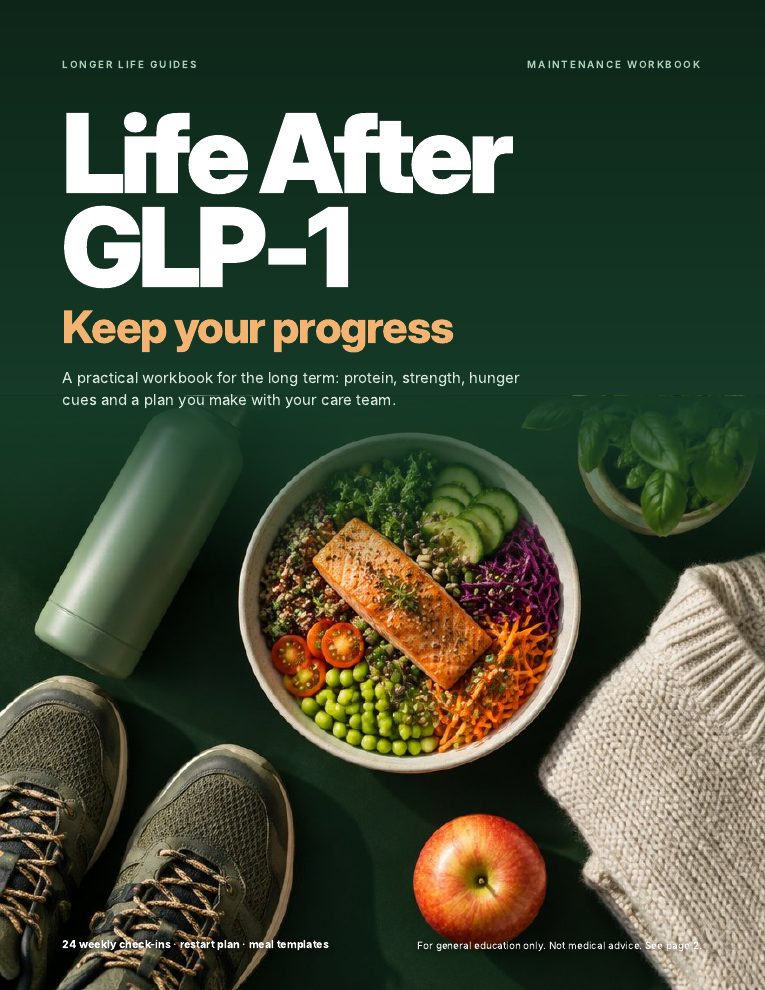
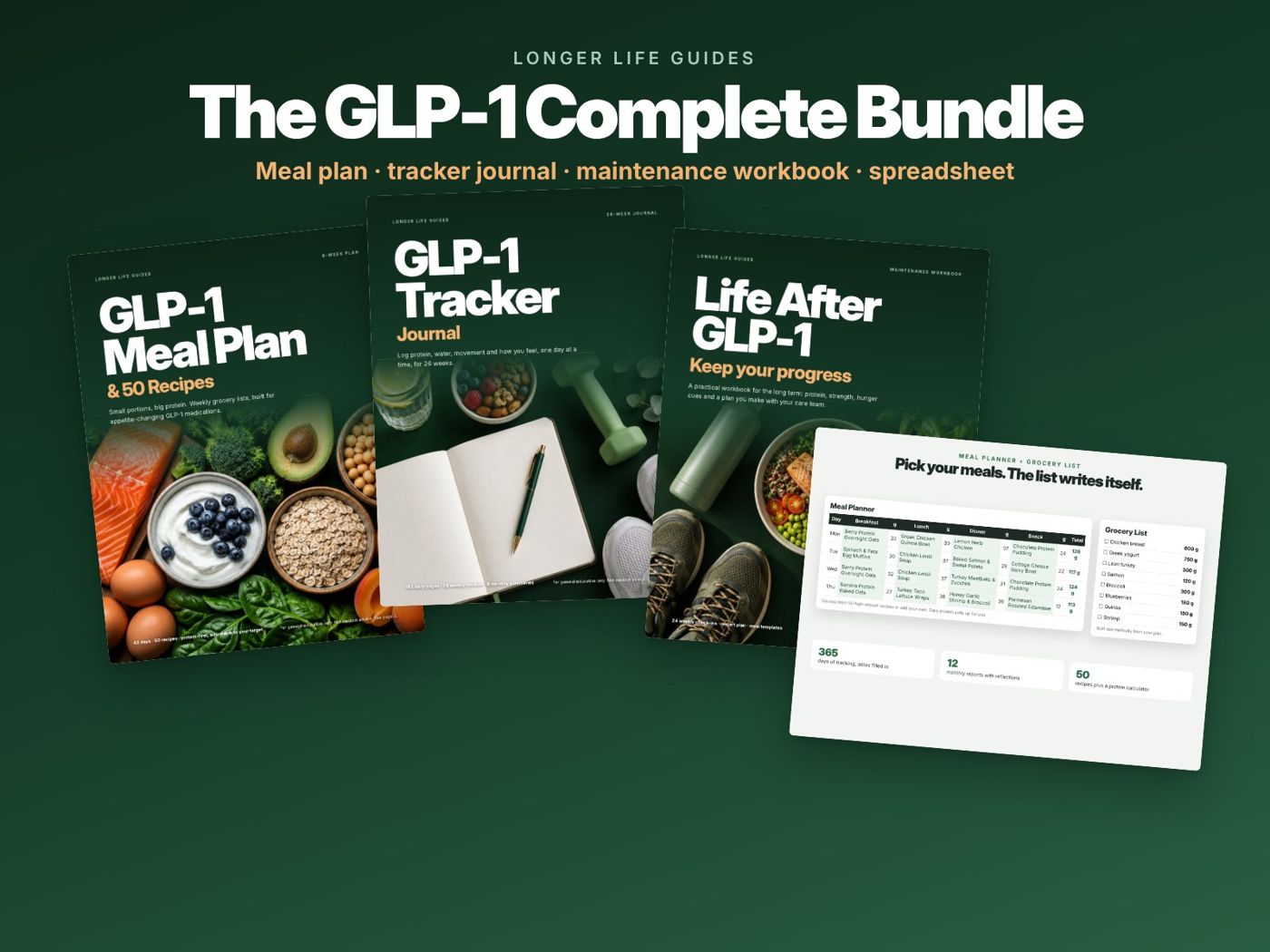
Life After GLP-1 is a workbook for continuing, reducing or stopping treatment with your care team, with maintenance zones, habit maps, meal templates, strength basics and weekly check-ins.