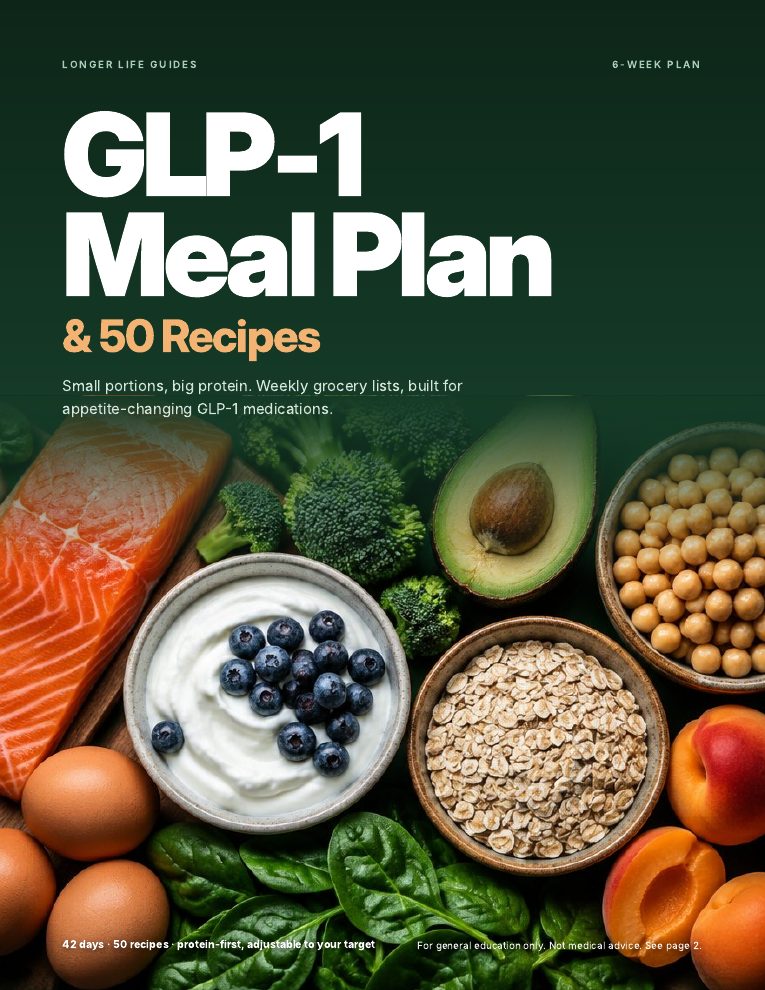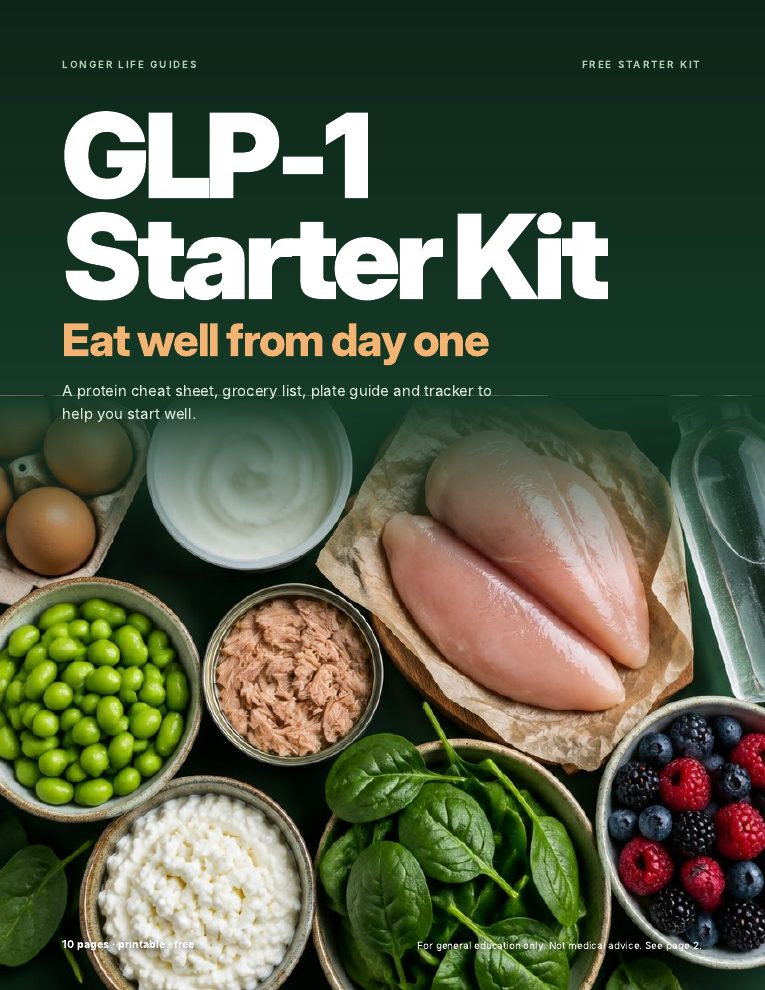
When appetite drops, every bite counts. Here is how to build small meals that protect muscle and keep you feeling well.
GLP-1 medicines such as semaglutide, and tirzepatide (which acts on GLP-1 and GIP), work partly by slowing how quickly the stomach empties and by turning down hunger signals in the brain. Many people find they are satisfied with much smaller portions. That can be a relief, but it also means it is easier to under-eat the nutrients your body still needs.
Why protein comes first
When you eat less overall, you can lose muscle as well as fat. Muscle matters for strength, balance and a healthy metabolism. Eating enough protein, and doing some strength exercise, helps protect it. A useful habit is to eat the protein part of your meal first, while your appetite is at its best.
Your doctor or dietitian can give you a personal protein target. Many people find it helpful to spread protein across the day, rather than trying to fit it into one meal.
Build a protein-first plate
- Start with protein: fish, chicken, eggs, tofu, Greek yogurt, cottage cheese, beans or lentils.
- Add vegetables or fruit for fibre, vitamins and volume.
- Add a small portion of whole grains such as oats, quinoa or whole grain bread.
- Sip fluids between meals, rather than drinking a lot with food.
Eating with side effects
Nausea, reflux and constipation are common, especially when starting or increasing a dose. Smaller, lower-fat meals, eating slowly, stopping when you feel comfortably full, plenty of fluids and gradually increasing fibre can all help. If side effects are severe or do not settle, speak to your prescriber.
A sample day
- Breakfast: Greek yogurt with berries and chia seeds
- Lunch: tuna or chickpeas on whole grain toast with cucumber
- Snack: cottage cheese with cherry tomatoes
- Dinner: baked salmon, green beans and a small portion of quinoa
Small, steady changes add up. Focus on protein, fluids and regular meals, and check in with your care team about your own targets.