PCOS has been renamed PMOS — polyendocrine metabolic ovarian syndrome. Here is why the name changed, what stays the same, and what it means for diagnosis and care.
The short answer
In May 2026, the condition long known as polycystic ovary syndrome (PCOS) was formally renamed polyendocrine metabolic ovarian syndrome (PMOS). The change was not made because the condition itself changed. It was made because the old name was misleading: many people with the condition do not have ovarian “cysts,” and the condition can affect far more than the ovaries.
The new name is intended to reflect the condition more accurately: it can involve endocrine (hormone), metabolic and ovarian features. Professional groups including the American Society for Reproductive Medicine, the Endocrine Society, ESHRE and Monash have endorsed the change, with a transition period in which both PCOS and PMOS will continue to appear in clinics, research papers, patient resources and search results.
Why was PCOS renamed?
The words “polycystic ovary syndrome” created several problems. First, the follicles seen on ultrasound are not the same thing as pathological ovarian cysts. Second, ovarian appearance is only one possible feature of the condition. A person can meet diagnostic criteria without having polycystic ovarian morphology.
The old name also made it easy to think of PCOS as only a reproductive condition. In reality, the syndrome can affect ovulation, androgen levels, skin and hair, fertility, glucose regulation, cardiovascular risk, sleep and emotional wellbeing. The new term — polyendocrine metabolic ovarian syndrome — is designed to make that broader picture harder to miss.
Does the diagnosis change?
The name change does not mean everyone needs to be re-diagnosed. The diagnostic framework remains based on the established features used in international guidance, after other causes are excluded. In adults, clinicians look for combinations of irregular or absent ovulation, clinical or biochemical signs of androgen excess, and polycystic ovarian morphology or, in appropriate settings, AMH as an alternative marker.
Because terminology is changing gradually, you may see “PCOS,” “PMOS,” or “PCOS/PMOS” used for several years. If your medical records say PCOS, that does not make the diagnosis obsolete.
Why the metabolic part matters
One of the most important reasons for the new name is to highlight metabolic health. International guidance recommends checking glycaemic status at diagnosis because people with PMOS/PCOS have a higher risk of impaired glucose tolerance and type 2 diabetes regardless of body size. The 75-g oral glucose tolerance test is considered the most accurate test for glycaemic status in PMOS/PCOS; fasting glucose or HbA1c may be used when an OGTT cannot be done, although they are less sensitive.
This does not mean every person with PMOS has diabetes or needs the same treatment. It means metabolic health deserves routine attention alongside cycles, skin, fertility and other symptoms.
What should you track?
Symptoms can vary widely, so a simple record is often more useful than trying to remember six months of changes during a short appointment.
- Cycle length, skipped periods and bleeding pattern
- Acne, facial/body hair changes or scalp hair thinning
- Sleep, mood and energy
- Changes in weight or waist measurement if you choose to track them
- Medicines, supplements and side effects
- Blood test results and dates
Tracking does not diagnose PMOS, but it can make patterns easier to discuss with your clinician.
What the name change means for you
If you already live with PCOS, the most practical takeaway is that the condition is being reframed as a whole-body syndrome rather than an “ovary problem.” Your current treatment plan should not be changed simply because the name changed. Instead, use the new terminology as a prompt to ask whether your care is covering the parts of the condition that matter to you — cycles, metabolic health, skin and hair, fertility if relevant, sleep and mental wellbeing.
Practical resource
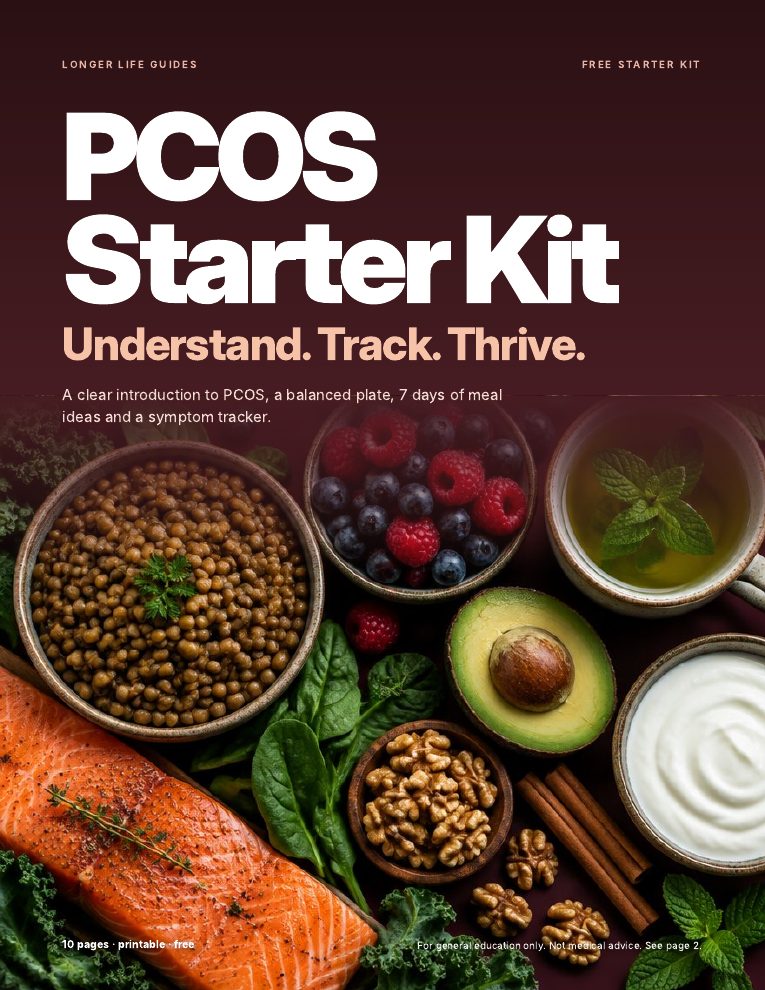
If you want a plain-language overview and a place to organize symptoms, cycles and appointments, start with the free kit or the 24-week planner.