There is no single PCOS diet. Balanced meals, regular movement and good sleep support how you feel.
Polycystic ovary syndrome (PCOS) is a common hormonal condition. It can affect periods, skin, hair, mood, weight and fertility, and it is often linked with insulin resistance. The good news is that everyday habits can make a real difference to symptoms and long-term health.
There is no one "PCOS diet"
International guidelines recommend healthy eating and regular physical activity for people with PCOS, without one specific diet. The best approach is one you can enjoy and keep up. Restrictive diets often backfire.
The balanced plate
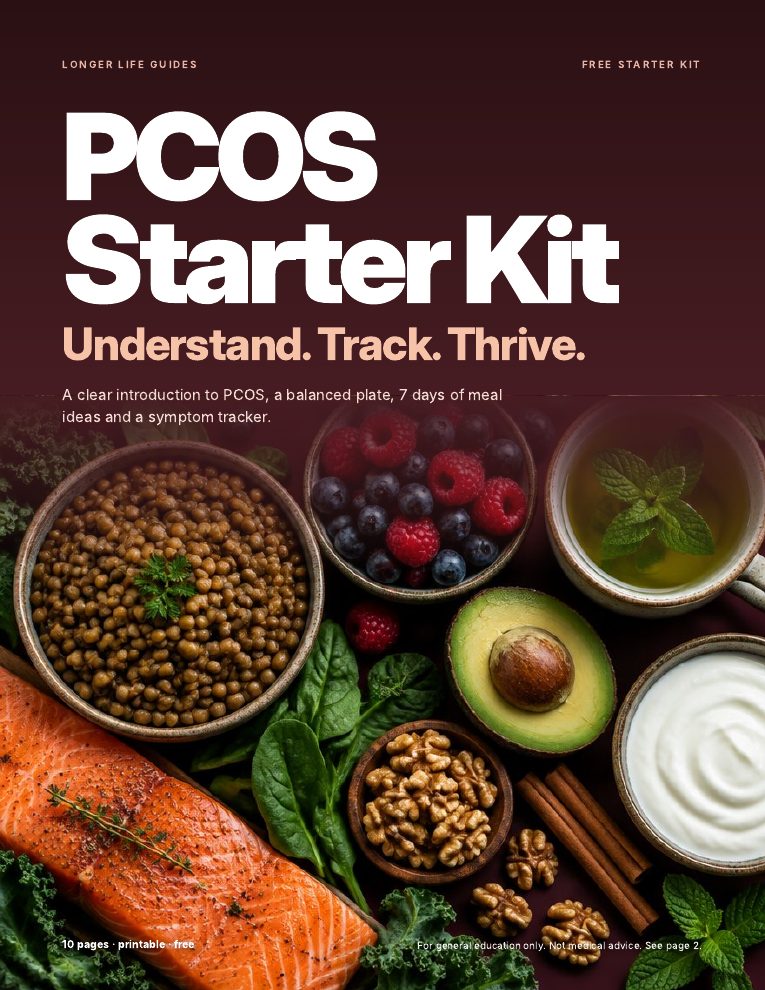
- Half the plate: vegetables and some fruit
- A quarter: protein such as fish, eggs, tofu, beans or chicken
- A quarter: whole grains or starchy vegetables such as oats, brown rice or sweet potato
- A little healthy fat: olive oil, nuts, seeds or avocado
Pairing carbohydrates with protein and fibre can help keep energy steady.
Movement, sleep and stress
Regular movement improves insulin sensitivity and mood. Sleep and stress also affect hormones and appetite. Small, consistent steps matter more than perfection.
Track and talk to your doctor
Keeping a record of your cycle, symptoms, meals and how you feel helps you and your doctor understand what is happening and what helps. Bring your notes and questions to appointments.