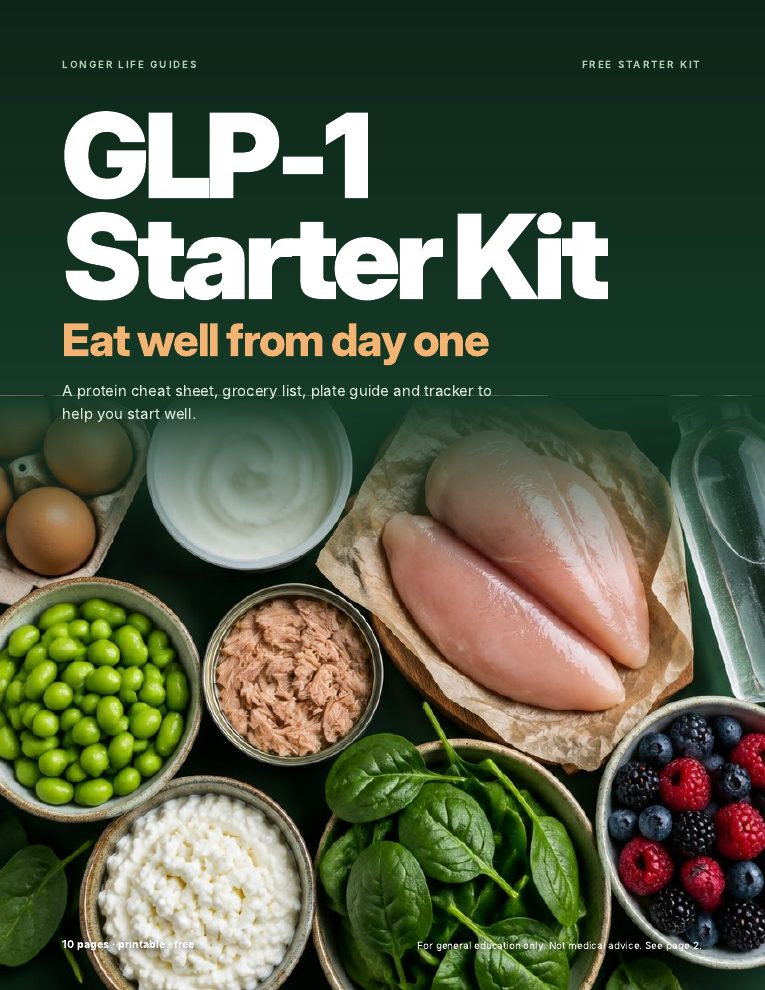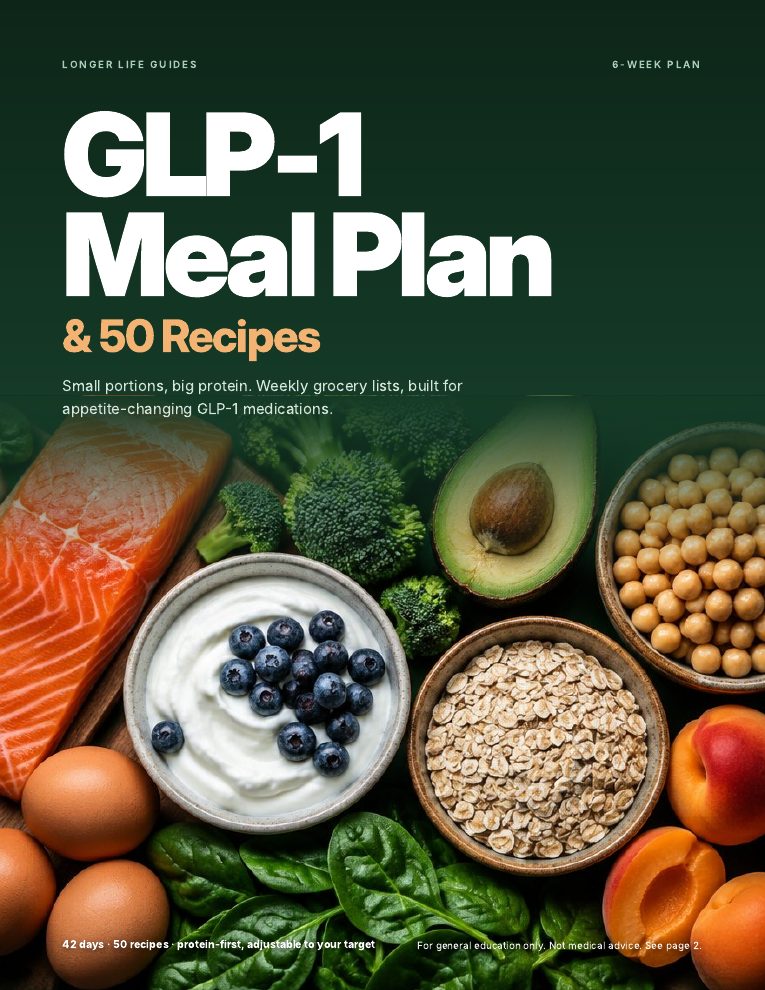
Protein needs change with age, pregnancy and GLP-1 weight loss. See recommended amounts in g/kg, how to spread protein across meals and who should be careful.
Protein helps your body build and repair muscle, bone, skin and hormones. How much you need depends on your body size, age, activity and life stage. Needs shift in pregnancy, after menopause and during weight loss, including weight loss with GLP-1 medicines such as semaglutide or tirzepatide.
Get a personalised range with our free protein calculator, then read on to understand where those numbers come from.
The basic recommendation
Health Canada's Recommended Dietary Allowance (RDA) for protein for adults is 0.8 grams per kilogram of body weight per day. For a woman weighing 65 kg, that is about 52 g a day.
The RDA is set to meet the needs of nearly all healthy adults. It is a minimum to prevent deficiency, not necessarily the ideal amount for every goal. Many researchers and clinicians suggest that some groups may benefit from more.
Protein after 40 and through menopause
From midlife, we gradually lose muscle mass and strength, and the drop in estrogen around menopause can speed up losses in muscle and bone. Muscle matters for balance, blood sugar control and staying independent as you age.
Because of this, many experts suggest older adults aim for around 1.0 to 1.2 g/kg per day, especially if they are active. Pairing enough protein with strength training two or more times a week appears to work better than either alone.
Protein during GLP-1 weight loss
GLP-1 medicines reduce appetite, which can lead to eating much less overall, sometimes including too little protein. During any significant weight loss, some of the weight lost comes from muscle rather than fat.
To help protect muscle, an intake of around 1.2 to 1.5 g/kg per day is often discussed by clinicians and dietitians for people losing weight on these medicines. This is not an official guideline, and the right amount depends on your health, kidney function and goals. A registered dietitian can individualise it, often based on a target or adjusted body weight rather than current weight.
Practical tips when appetite is low:
- eat the protein part of your meal first
- choose protein-dense foods like Greek yogurt, eggs, cottage cheese, tofu, fish or poultry
- try smaller, more frequent meals or snacks
- combine protein with strength training to signal your body to keep muscle
The short version
Protein in pregnancy and breastfeeding
Protein needs rise in the second half of pregnancy, as the baby, placenta and your own tissues grow. Health Canada's RDA for pregnancy is 1.1 g/kg per day, or about 71 g per day. In the first half of pregnancy, needs are about the same as before pregnancy. Breastfeeding also raises needs, to an RDA of 1.3 g/kg per day.
Most people can meet this through food by including a protein source at each meal and snack. If nausea or food aversions make this difficult, talk to your care provider or a dietitian.
Spread it out across the day
Many people eat little protein at breakfast and most of it at dinner. Spreading protein more evenly, with roughly 20 to 30 g per meal, may help your body use it better for muscle. Approximate amounts in common foods:
- 75 g (2.5 oz) cooked chicken, fish or lean meat: about 20 to 25 g
- 175 g (3/4 cup) plain Greek yogurt: about 15 to 18 g
- 2 large eggs: about 12 g
- 175 ml (3/4 cup) cooked lentils or beans: about 12 to 13 g
- 150 g firm tofu: about 15 to 20 g, depending on the brand
- 60 ml (1/4 cup) nuts or seeds: about 6 to 8 g
Check nutrition labels, as amounts vary. Canada's Food Guide encourages choosing plant-based proteins more often, along with fish, eggs, dairy and lean meats.
Do you need protein powder?
Most people can meet their needs with regular food. Powders and shakes can be convenient when appetite is low or time is short, but they are not required. If you use them, choose products with simple ingredients and be aware that supplements are less tightly regulated than food.
When to get medical advice
Higher protein intakes are not right for everyone. Talk to your doctor or a registered dietitian before increasing your protein if you:
- have chronic kidney disease or reduced kidney function, as you may need to limit protein
- have liver disease or a condition affecting how you process protein
- are taking a GLP-1 medicine and are struggling to eat, losing weight very quickly, or feeling weak or dizzy
- have persistent vomiting, diarrhea or signs of dehydration
- are pregnant and finding it hard to eat enough of anything
- have a history of disordered eating
Seek urgent care for severe abdominal pain, ongoing vomiting or signs of serious dehydration, such as very little urine, confusion or fainting.
Try the free protein target tool
A daily and per-meal protein range for GLP-1, menopause or pregnancy. It takes about a minute and your answers stay on your device.