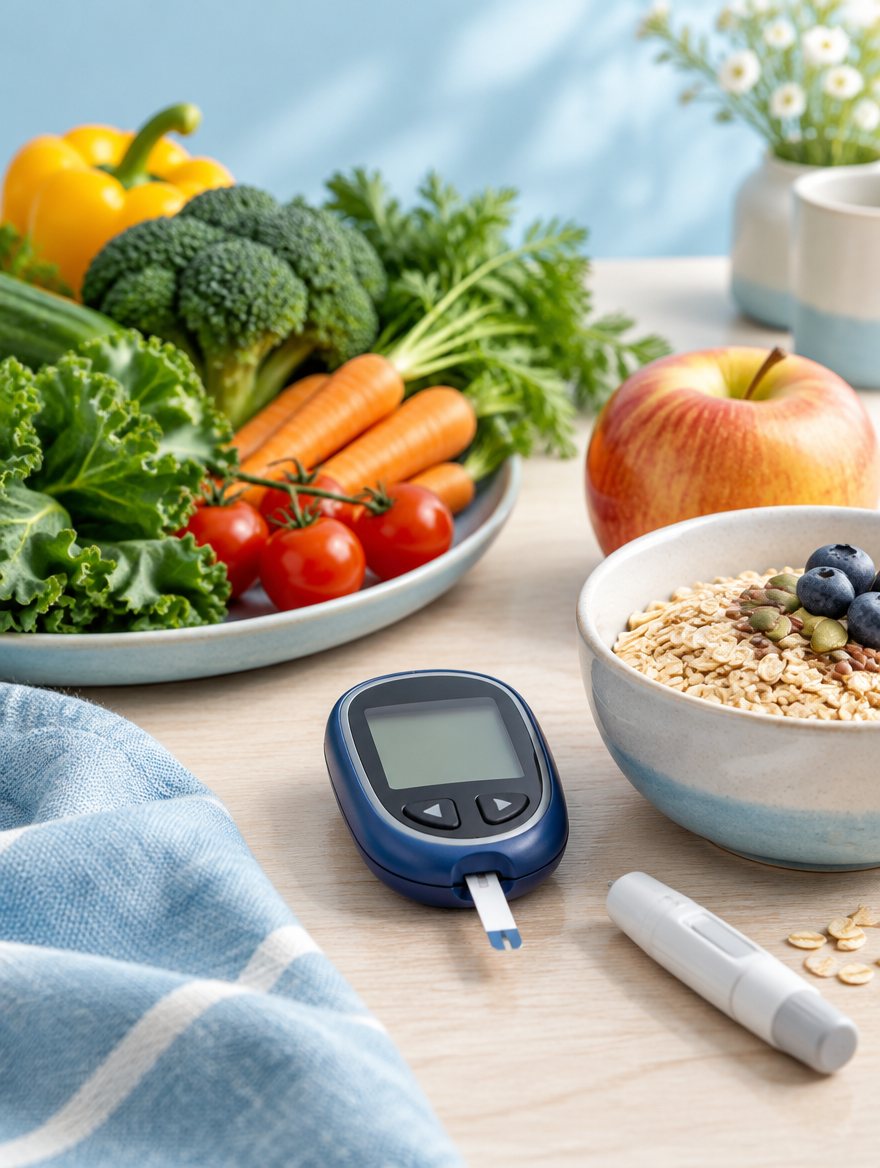
All three cause high blood sugar, but for different reasons. Learn how each type starts, who it affects, how it is treated and what gestational diabetes means for your future health.
The short answer
Type 1 is an autoimmune condition where the body stops making insulin; it needs insulin from diagnosis. Type 2, about 90% of cases, is when the body doesn’t use insulin well and gradually makes less; it is managed with lifestyle changes and medicines. Gestational diabetes develops during pregnancy, usually goes away after birth, and raises the later risk of type 2 diabetes.
Side by side
| Type 1 | Type 2 | Gestational | |
|---|---|---|---|
| Cause | Immune system destroys insulin-making cells | Insulin resistance and falling insulin production | Pregnancy hormones raise insulin resistance |
| Share of cases | About 5–10% | About 90% | Affects about 1 in 7 to 1 in 10 pregnancies |
| Typical onset | Childhood or young adulthood, but any age | Usually adulthood, increasingly younger | Second half of pregnancy |
| Onset speed | Often sudden | Gradual, often no symptoms | Found by screening at 24–28 weeks |
| Treatment | Insulin always | Lifestyle, metformin, GLP-1s, others, sometimes insulin | Diet, activity, glucose monitoring, sometimes insulin or metformin |
| Preventable? | No | Often delayed or prevented | Risk can be lowered |
The short version
Symptoms to know
Thirst, peeing often, tiredness, blurred vision, slow-healing cuts and frequent infections. Type 1 can also cause rapid weight loss and, if untreated, diabetic ketoacidosis, an emergency marked by vomiting, belly pain, fast breathing and confusion. Type 2 and gestational diabetes often cause no symptoms, which is why screening matters.
After gestational diabetes
Women who had gestational diabetes have a much higher lifetime risk of type 2 diabetes. Get a glucose test 6 weeks to 6 months after birth, then regular screening. Breastfeeding, activity and healthy weight changes lower the risk.
Know your risk
Our free diabetes risk test takes two minutes and tells you whether to ask your doctor about an A1C or fasting glucose test.
Frequently asked questions
What is the main difference between type 1 and type 2 diabetes?
Type 1 is autoimmune and the body makes no insulin. In type 2, the body doesn’t use insulin well and makes less over time.
Can gestational diabetes turn into type 2?
It usually goes away after birth, but it greatly increases the risk of type 2 later, so regular testing is recommended.
Can type 2 diabetes be reversed?
Some people reach normal blood sugar without medicines through weight loss and lifestyle changes, called remission, but the risk remains.
Which type of diabetes is more common?
Type 2, which accounts for about 90% of cases.
Try the free type 2 diabetes risk tool
A short, validated questionnaire to see if you should be tested. It takes about a minute and your answers stay on your device.