“Cortisol belly” and cortisol detox trends are everywhere. Here is what stress really does to sleep and the body, the habits with evidence behind them, and when to get help.
The short answer
Cortisol is a normal stress hormone that rises in the morning to wake you up and falls at night. Ongoing stress can keep you on high alert, making it harder to fall and stay asleep, and poor sleep then makes stress harder to handle. Supplements and “cortisol detox” drinks have little evidence. Regular sleep times, daylight, movement, less late caffeine and alcohol, and techniques that calm the nervous system do.
What stress does to the body
Short bursts of stress are useful. Long-term stress is linked to poor sleep, low mood, anxiety, headaches, digestive symptoms, cravings, raised blood pressure and changes in periods. Social media claims that a specific “cortisol face” or “cortisol belly” can be diagnosed from a photo are not supported; true cortisol disorders such as Cushing’s syndrome are rare and need medical testing.
The short version
Habits with evidence behind them
- A fixed wake time, even on weekends, anchors your body clock
- Morning daylight for 10 to 30 minutes
- Exercise most days; even brisk walking lowers stress and improves sleep
- Caffeine cut-off about 8 hours before bed, and less alcohol, which fragments sleep
- A wind-down routine: dim lights, screens away 30 to 60 minutes before bed
- Slow breathing: breathing out longer than you breathe in for 5 minutes calms the stress response
- Worry time: write tomorrow’s to-do list and worries earlier in the evening
- Connection: time with people you trust is one of the strongest buffers against stress
If you can’t sleep
If you have trouble sleeping at least three nights a week for three months, that is chronic insomnia. The recommended first treatment is cognitive behavioural therapy for insomnia (CBT-I), which works better long-term than sleeping pills. It is available through clinicians, online programmes and apps.
When to see a doctor
Book an appointment if stress or poor sleep lasts weeks and affects daily life, if you snore loudly or stop breathing in your sleep, or if you have low mood, panic attacks or anxiety. Hot flushes and night sweats in your 40s may point to perimenopause. If you have thoughts of self-harm, call or text 988 in Canada or the US.
Frequently asked questions
How can I lower cortisol naturally?
Regular sleep and wake times, morning daylight, exercise, slow breathing, less late caffeine and alcohol, and time with people you trust.
Is cortisol belly real?
Long-term stress can affect appetite and weight, but you cannot diagnose a cortisol problem from belly shape. Real cortisol disorders are rare and need tests.
What is the best treatment for insomnia?
Cognitive behavioural therapy for insomnia (CBT-I) is the recommended first treatment.
Do cortisol supplements work?
There is little good evidence for them, and some can interact with medicines.
A practical reset
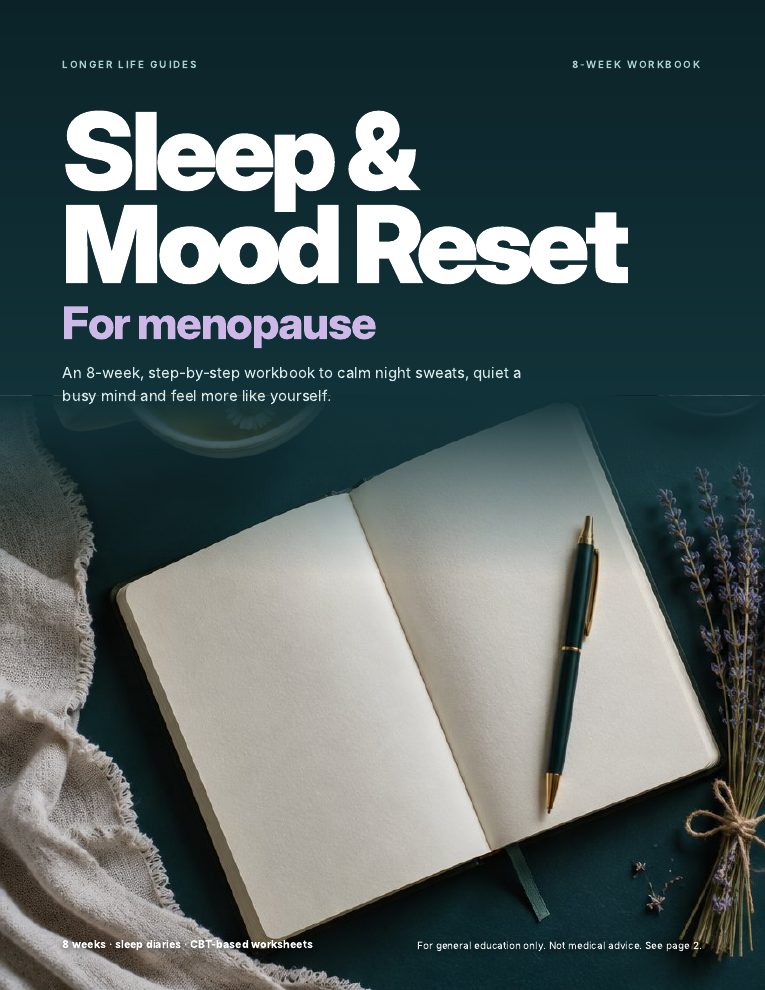
The Sleep & Mood Reset workbook turns the evidence on sleep, stress and mood into a simple 4-week plan with trackers.