Bone loss speeds up after menopause. Food, movement and a few checks help keep bones strong.
Oestrogen helps keep bones strong. After menopause, bone is lost faster, especially in the first five to ten years, which raises the risk of osteoporosis and fractures. The habits you build now help protect you for decades.
How much calcium?
Many adults over 50 are advised to aim for about 1,000 to 1,200 mg of calcium a day, ideally from food. Your doctor can tell you what is right for you. Your body absorbs calcium best in smaller amounts spread across the day.
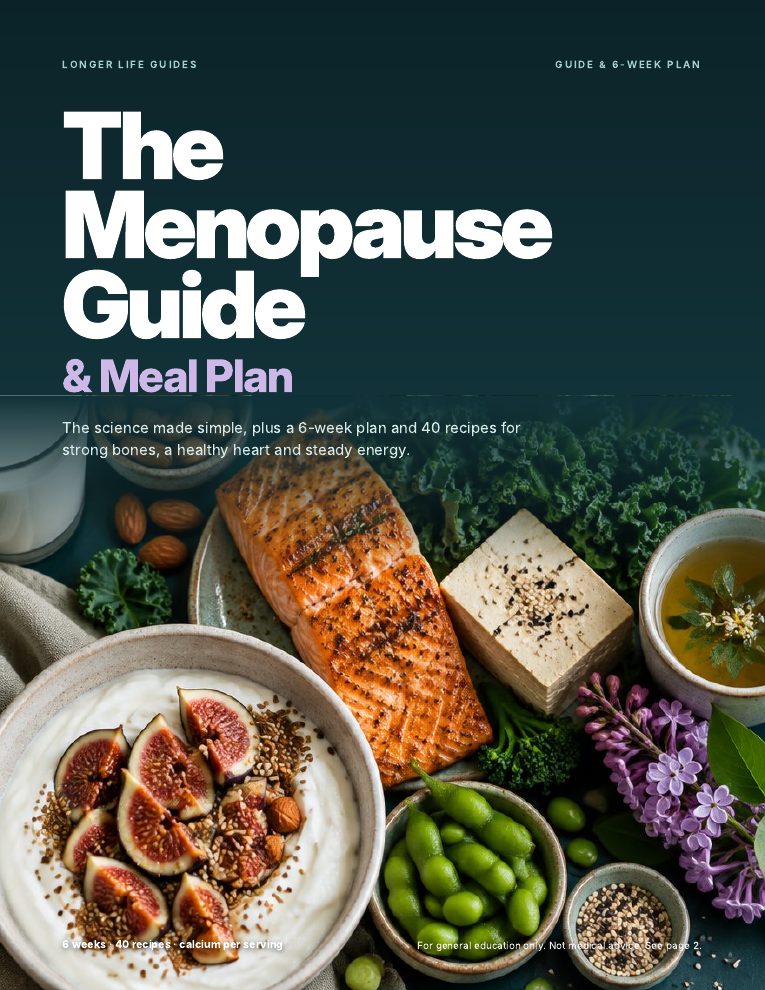
Calcium-rich foods
- Plain yogurt and milk, or calcium-fortified soy milk
- Calcium-set tofu (check the label for calcium sulphate)
- Canned sardines or salmon with the soft bones
- Cheese
- Kale, bok choy and other leafy greens
- Almonds, tahini and sesame seeds
Spinach contains calcium, but very little of it is absorbed, so do not rely on it.
Vitamin D, protein and movement
Vitamin D helps you absorb calcium. Many health services advise a supplement in autumn and winter; ask your doctor. Protein at each meal supports bone and muscle, and weight-bearing and strength exercise signal your bones to stay strong.
Know your risk
Ask your doctor about bone health if you have risk factors such as early menopause, a family history of osteoporosis, a previous fracture, smoking or long-term steroid use. A bone density scan may be recommended.